


Diamond carat is the standard unit used to measure a diamond’s weight, not its size. One carat equals 0.2 grams, which is about the weight of a small paperclip.
Carat is one of the famous Four Cs that influence a diamond’s quality and value. It is often misunderstood because many people think it refers to how large a diamond looks. In reality, two diamonds with the same carat weight can appear different in size depending on their cut and shape. It is also important not to confuse carat with karat, which measures the purity of gold.
The carat system has an interesting history. Early gemstone traders used tiny carob seeds as natural counterweights on their scales because they were similar in weight. Over time, this method evolved, and in 1913, the modern metric carat was introduced, creating the global standard used today.
Carat weight plays a major role in a diamond’s price and visual presence. As carat increases, rarity and cost rise as well. Understanding carat weight helps you compare diamonds more clearly and choose the right balance between beauty, size, and budget.
Diamonds are weighed using highly precise digital scales designed specifically for gemstones. In this system:
1 carat = 200 milligrams
Each carat is divided into 100 points (for example, 0.75 carat = 75 points)
This level of precision allows jewelers and gemologists to measure diamonds accurately, even down to tiny fractions of a carat, ensuring fair pricing and consistent quality standards.
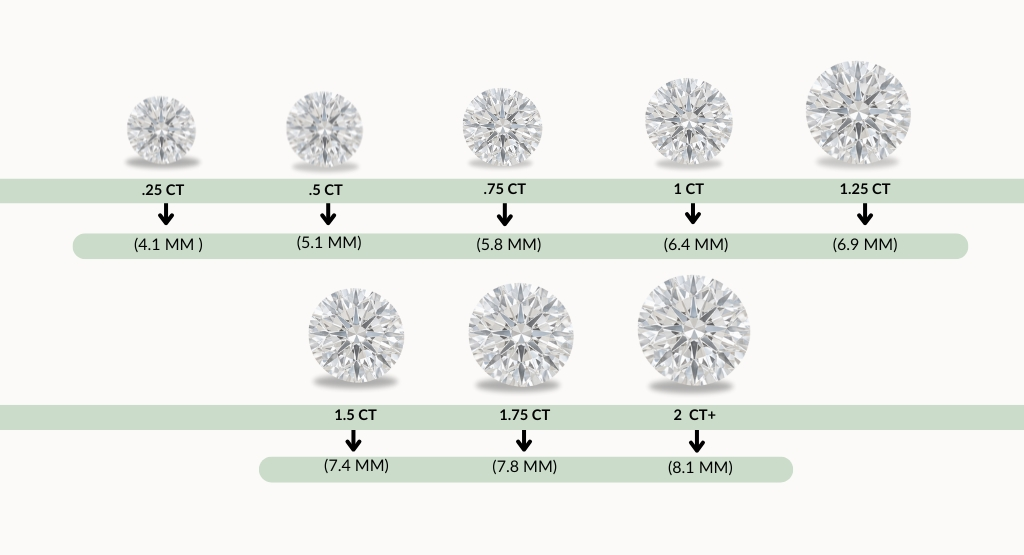
A carat tells you how much a diamond weighs, not how big it looks. This is why two diamonds with the same carat weight can still appear different in size when you see them in a ring or necklace.
For example, a one-carat round diamond is usually about 6.4 mm wide. A one-carat sapphire is a little smaller, around 6.0 mm, because sapphires are heavier than diamonds even when they are the same weight.
The cut of a diamond also matters a lot. A well-cut diamond spreads light better and often looks larger and brighter. A poorly cut stone may look smaller, even though it weighs the same. Size charts can give you a general idea, but every diamond is unique. Carat helps compare weight, while the cut and shape decide how big and beautiful the diamond looks in real life.
Our diamond carat size chart helps you compare how different diamond shapes look at various carat weights. Each image shows the diamond from a top view, so you can easily understand its face-up size.
Use this chart as a simple guide when comparing diamond sizes and choosing the right stone for your ring or jewelry. Since every diamond is unique, the actual appearance may vary slightly.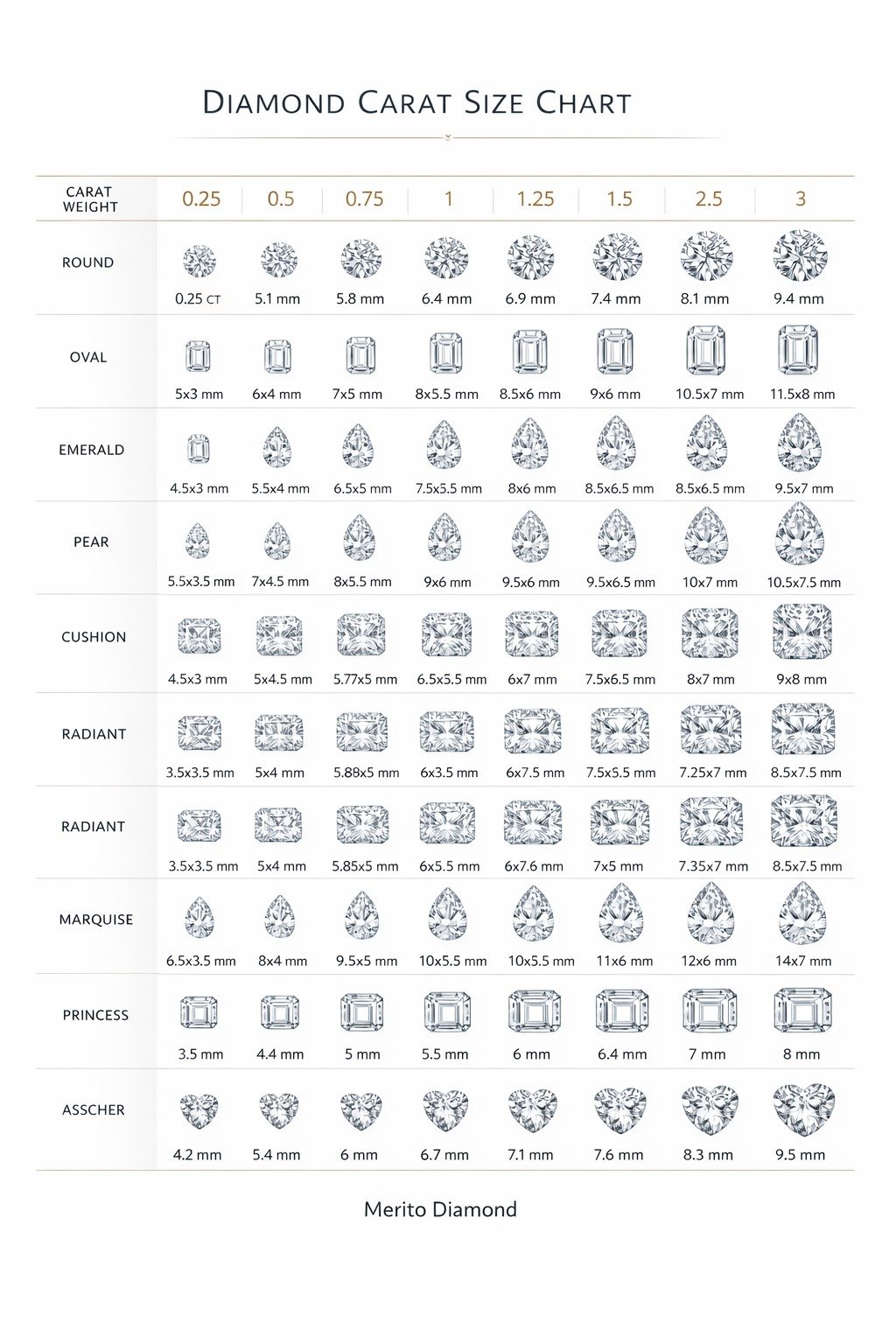
A diamond’s carat weight plays a major role in determining its price. Larger diamonds are rarer to find in nature, which makes them more valuable than smaller stones. Because of this, diamond pricing does not increase evenly. For example, a one-carat diamond usually costs more than two half-carat diamonds of the same quality.
In the diamond industry, certain weights are known as “magic sizes.” These include 0.50 carat, 0.75 carat, and 1.00 carat. Diamonds at or just above these weights are especially popular, so the price per carat rises sharply at these points due to higher demand.
To understand this better, imagine two diamonds with the same cut, color, and clarity—one weighs 0.97 carats and the other 1.03 carats. Visually, they will look almost identical. However, the 1.03-carat diamond will cost much more simply because it crosses the one-carat mark.