

A diamond’s cut is where the true magic happens. While nature gives a stone its color and clarity, it takes a master craftsman to unlock its soul. The cut isn’t just about the shape; it’s about how the stone dances with light. When a diamond is cut with precision, it creates that unmistakable “wow” factor through a balance of white-light brilliance, flashes of rainbow fire, and the rhythmic sparkle or scintillation that follows every movement of your hand.
In the world of grading, the GIA looks at everything from Excellent down to Poor. An Excellent cut is the gold standard; it’s designed to catch every bit of light and bounce it right back to your eyes, making the stone look radiant and full of life. On the other hand, a poorly cut diamond feels “leaky.” Instead of reflecting light, it lets it slip out through the bottom, leaving the diamond looking dark and somewhat flat, regardless of how expensive the stone may have been. At the end of the day, the cut is what gives a diamond its personality; it’s the difference between a stone that sits there and one that truly shines.
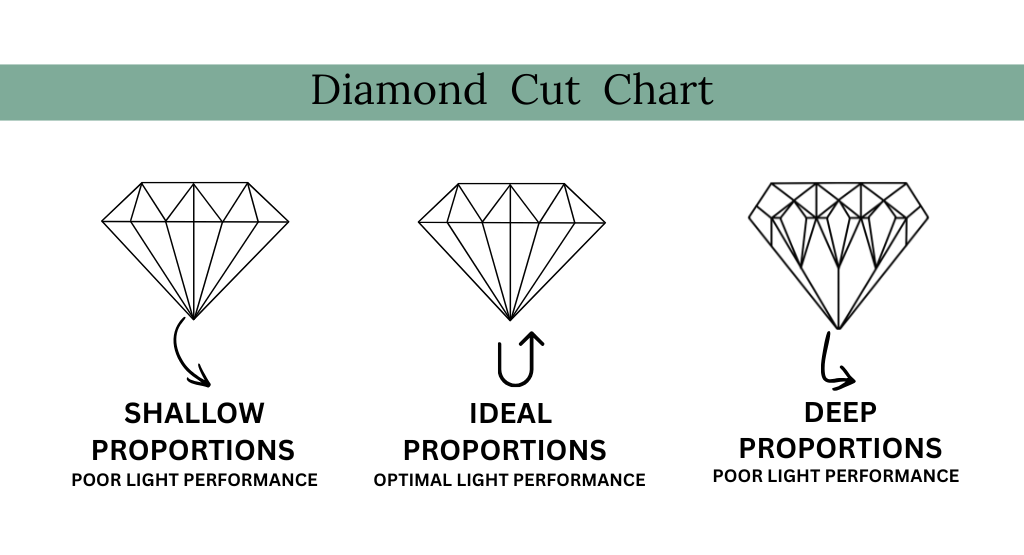
A diamond’s beauty is ultimately defined by its cut, a precise combination of symmetry, proportion, and polish. At Merito, every diamond we handle is crafted with a focus on maximizing brilliance, choosing the vibrant dance of light over simply maintaining a heavier carat weight.
It is common to confuse “cut” with “shape,” but they serve very different roles. The shape is the physical outline you see, such as a round or an oval. It is widely considered the most vital of the 4Cs because it determines how the diamond interacts with light. A masterfully cut stone captures light and reflects it with intense fire and sparkle, whereas a poorly cut stone can appear dull and dark, regardless of its size or purity.
A diamond’s cut is really about choosing the stone’s “energy.” While the other 4Cs describe a diamond’s physical history, the cut is what actually makes it perform. It is easily the most critical factor because it acts as the engine behind that famous sparkle. A top-tier cut doesn’t just sit there on your hand; it actively pulls in light and tosses it back out, creating that sharp, radiant glow we all look for in a piece of jewelry.
Diamond cutting is one of the most important steps in transforming a rough stone into a brilliant gemstone. A diamond may be naturally rare, but its true beauty only appears after it is carefully cut and polished by skilled experts. The cut of a diamond determines how well it reflects light, how much it sparkles, and how attractive it looks overall.
Unlike shape, which refers to the outline of a diamond (such as round or oval), the cut refers to the quality of the diamond’s proportions, symmetry, and finish. Even a diamond with excellent color and clarity can look dull if it is not cut properly.
Because cut has such a strong effect on appearance, gemological laboratories developed grading systems to measure cut quality in a consistent and reliable way.
Gemological Institute of America (GIA) Cut Grading System: Excellent, Very Good, Good, Fair, Poor
International Gemological Institute (IGI) Cut Grading System: Ideal, Excellent, Very Good, Good, Fair

We use a detailed grading scale to help you understand differences in cut quality when choosing your diamond.
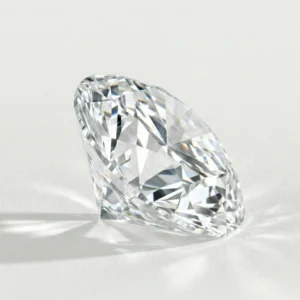
The pinnacle of craftsmanship. These diamonds are engineered with perfect proportions to ensure that almost 100% of the light that enters is reflected back. It’s the ultimate choice for someone who wants maximum “fire” and a stone that looks larger and brighter than any other.
A masterclass in light performance. This grade offers an incredible balance of brilliance and sparkle, making the diamond feel alive. It’s designed to hide imperfections and look stunning in any lighting, from a candlelit dinner to bright sunlight.
The “smart” choice for value. While it lacks the strict technical perfection of an Ideal cut, the difference is nearly impossible to see with the naked eye. You get a high-end, radiant look while allowing more flexibility in your budget for a higher carat or color.
A solid, reliable option. These diamonds still capture light well, but they don’t have the same intense “shimmer” as the higher tiers. It’s a great way to get a beautiful, genuine diamond while prioritizing a larger stone size.

When we talk about a diamond’s cut, we aren’t just talking about its shape (like round or pear). We’re talking about how well it handles light. Think of the cut as the diamond’s “engine”—if it’s built perfectly, it performs beautifully. If not, it looks dull.
Here is how that performance is broken down:
This is what you actually see when you look at the stone under a spotlight:
A. Brilliance: This is the pure white light reflecting back at you. It’s the “brightness” of the stone. A well-cut diamond acts like a series of mirrors, bouncing light around the inside and sending it right back to your eyes.
B. The Rainbows: Have you ever seen flashes of red or blue coming from a diamond? That’s “fire.” It happens when white light is split apart into a spectrum. Only precisely angled diamonds can do this effectively; if the cut is sloppy, the light just leaks out the bottom.
C. Scintillation: This is the “twinkle” factor. When you move your hand, you see a pattern of light and dark flashes. That contrast is what makes a diamond look “alive” rather than just a flat piece of glass.
D. The Blueprint: Think of proportions as the diamond’s architecture. Every facet is a tiny window. If the angles of the top (the crown) or the bottom (the pavilion) are off by even a fraction of a millimeter, the light gets “lost” inside. Great proportions ensure the diamond doesn’t look too shallow or too bottom-heavy.
E. The Finishing Touches: Even a perfectly designed diamond needs a master touch to finish it.
F. The Polish: This is the skin of the diamond. A “Poor” polish grade means there are microscopic scratches or nicks on the surface that make the stone look a bit blurry or oily. An “Excellent” polish means the surface is as smooth as a still lake.