

Diamonds have been valued for their brilliance, beauty, and enduring allure for a long time. Whether mined or lab-grown, every diamond tells a story of precision, craftsmanship, and quality. But how do you truly understand a diamond’s value and sparkle? The solution is found in the 4Cs — Cut, Color, Clarity, and Carat. These four essential factors determine a diamond’s beauty and worth, helping buyers make an informed and confident choice.
In this ultimate guide, we’ll explore how the 4Cs apply specifically to lab-grown diamonds, explaining what each “C” means and how it impacts the overall appearance and quality of your gem.
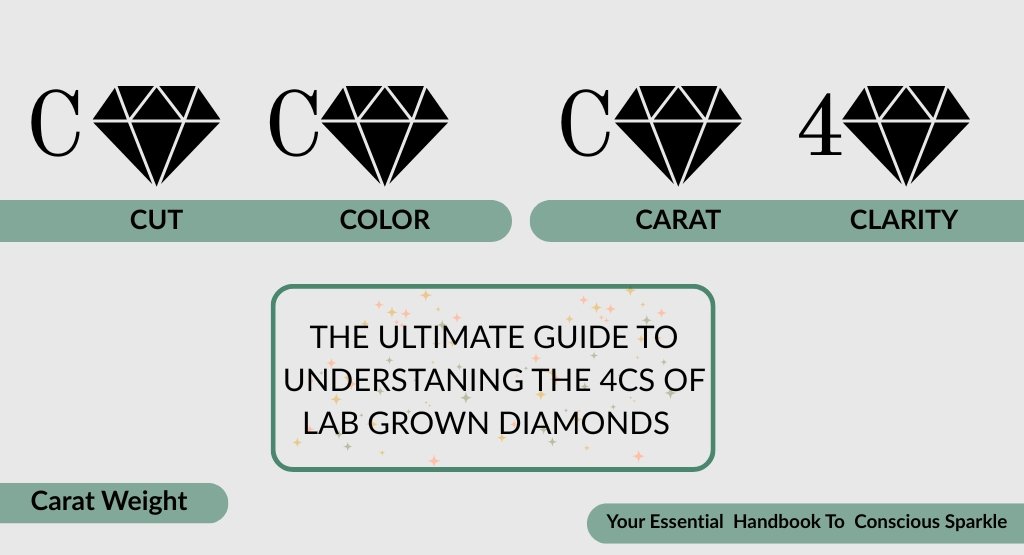
The 4Cs were established by the Gemological Institute of America (GIA) as a universal standard for grading diamonds. This system applies equally to both natural and lab-grown diamonds, ensuring consistency in evaluation and transparency in the diamond market.
Each “C” measures a distinct characteristic:
Understanding these four aspects allows you to assess quality beyond just appearance, giving you insight into how your lab-grown diamond was designed and refined.

Among all the 4Cs, the cut plays the most significant role in determining a diamond’s sparkle. It refers to how well the diamond’s facets are proportioned, angled, and polished to reflect light. A perfectly cut diamond captures light from every angle, creating the brilliant sparkle we all admire.
Lab-grown diamonds are often cut with precision using advanced technology, ensuring maximum brilliance and symmetry. Unlike mined diamonds, which may lose carat weight during cutting, lab-grown diamonds are grown in controlled environments, allowing experts to optimize every facet for ideal light performance.
The cut grades include Excellent, Very Good, Good, Fair, and Poor. A diamond with an Excellent or Ideal cut will deliver the best fire and scintillation, making it appear more luminous even if it’s smaller in carat size.
A well-cut lab-grown diamond is a true reflection of craftsmanship and innovation — combining ethical production with visual perfection.

The lack of color is the basis for grading diamond color. The GIA color grading system spans from D, representing completely colorless diamonds, to Z, which indicates a light yellow or brown tint. Diamonds that exhibit little to no color are considered rarer and therefore hold greater value.
Lab-grown diamonds typically have fewer color impurities because they are created in highly controlled environments. However, subtle color variations can still occur depending on the growth method — CVD (Chemical Vapor Deposition) or HPHT (High Pressure High Temperature).
Many buyers prefer near-colorless lab-grown diamonds (G–J), as they offer exceptional beauty and value without a visible difference to the eye.

Clarity refers to the presence of natural inclusions or blemishes inside a diamond. These tiny imperfections form during the growth process and can affect the diamond’s transparency and brilliance.
Lab-grown diamonds generally have fewer inclusions compared to mined ones, thanks to their controlled creation process. Still, some minor inclusions can appear, often visible only under magnification.
The clarity grading scale includes:
For most buyers, VS1 or VS2 clarity offers the ideal balance between beauty and affordability. With lab-grown diamonds, you can often afford a higher clarity grade at a better price point than natural diamonds.
Diamond Clarity Guides…
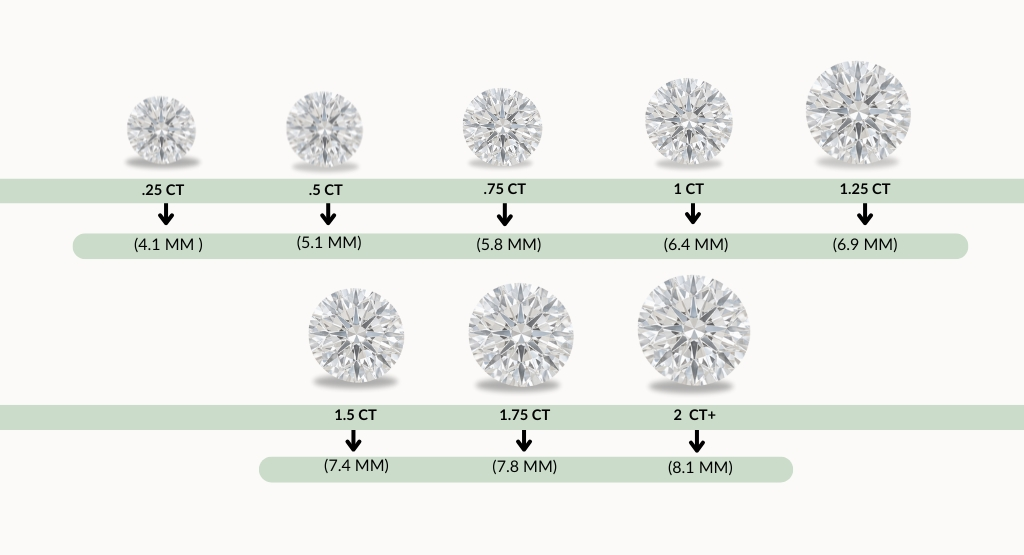
Carats are used to quantify a diamond’s weight rather than its size; one carat equals 0.2 grams. While carat often influences price, it doesn’t define beauty on its own. The cut, clarity, and color all play key roles in how large and brilliant the diamond appears.
Because lab-grown diamonds cost significantly less than mined diamonds, buyers can often choose larger carat weights without compromising quality or budget. This affordability allows for stunning statement pieces — from lab-grown diamond engagement rings to pendants — that showcase both size and sparkle.
It’s also worth noting that two diamonds with the same carat weight can appear different in size based on their cut proportions. A well-cut 1-carat diamond can look more radiant and impressive than a poorly cut 1.2-carat stone.
Diamond Carat Guides…
When comparing lab-grown and natural diamonds, the 4Cs serve as a fair and scientific benchmark. Both types are identical in chemical, physical, and optical properties — meaning their sparkle and durability are the same. The primary difference lies in origin.
Choosing a lab-grown diamond offers you a gem that is not only breathtaking in beauty but also created with integrity. It’s an ethical, environmentally responsible, and conflict-free choice — combining the best of modern technology with the enduring charm of classic elegance.
Shape is simply the outline you see (like a Circle, Oval, or Square), while Cut is how the facets are arranged to reflect light. The Round Brilliant is the most popular, but any other shape.
Why Fancy Shapes Cost Less, here is the unique detail that saves you money: It comes down to waste. A rough diamond from the earth looks like a lumpy pyramid. To cut a perfect circle (Round Brilliant), the cutter has to grind away nearly 50% of the original stone. Fancy shapes fit the natural rough crystal better, so less diamond is wasted during cutting. Because the cutter keeps more of the stone, you pay a lower price per carat.
Choosing the Right Look If you want the biggest look for your money, choose an elongated shape like an Oval, Pear, or Marquise. Because they stretch out over the finger, they look larger than round diamonds of the same weight. Just be careful with sharp corners (like on a Princess or Pear cut); they can chip if they hit something hard, so make sure your ring setting protects those tips.
Diamond Shape Guides…
Understanding the 4Cs of lab-grown diamonds empowers you to make an informed decision when selecting your perfect gem. Each factor — Cut, Color, Clarity, and Carat — contributes uniquely to a diamond’s beauty and brilliance.
Lab-grown diamonds offer unmatched transparency, quality, and value, giving you the freedom to choose an ethically sourced stone without compromising on luxury. Whether it’s for an engagement ring, pendant, or earrings, mastering the 4Cs ensures your diamond reflects not just brilliance, but also your values.